
« Ready to dive into macramé but overwhelmed by the endless cord options? Don’t worry—this article will help you untangle it all, one strand at a time!
When I first discovered macramé, my first question was: Where do I start? The cord is the most essential element, but with so many options available, how do you choose the right one? Each type of cord has its own unique charm and characteristics.
To help you, I’ve put together this illustrated guide, complete with photos, so you can easily recognize the different types of cords beyond just their descriptions.
So, let’s dive in and explore the main types of macramé cords available on the market!
1. Braided cord
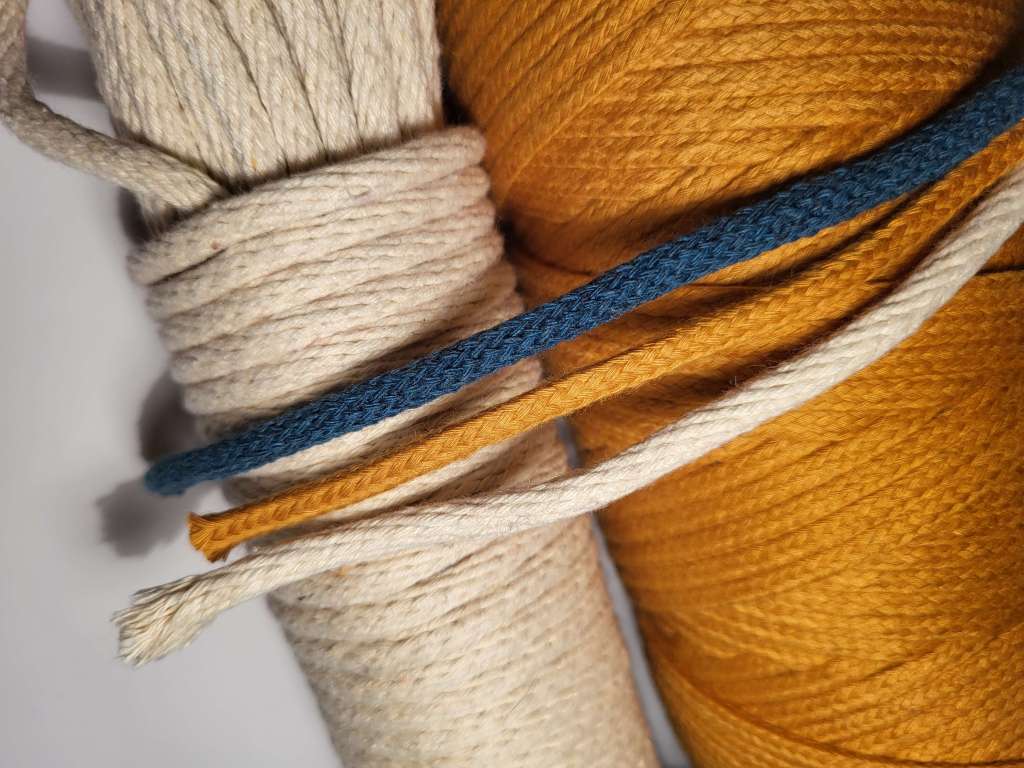
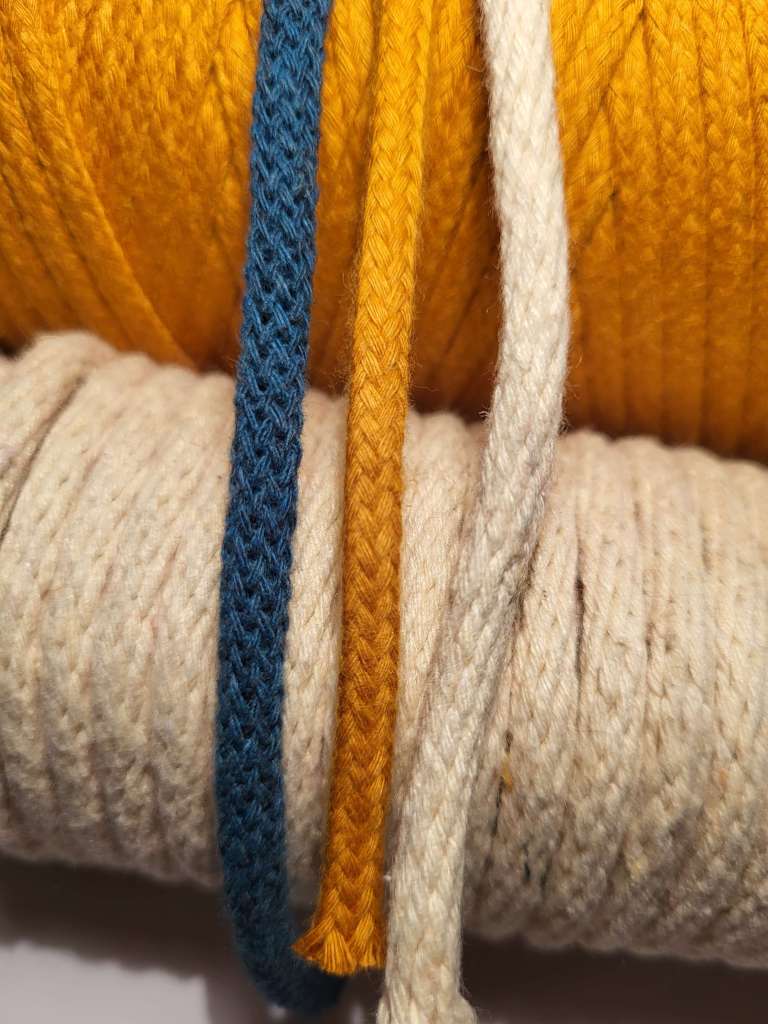
Made up of multiple strands woven together, this type of cord is flexible, highly durable, and easy to work with. It’s perfect for practicing knots and ideal for pixel macrame. However, it doesn’t allow for creating nice fringes or tassels. Some braided cords are more elastic than others, so it’s important to consider this elasticity when calculating the necessary cuts. Some types contain an inner cord that helps maintain the round shape and prevents flattening. The tighter and denser the weave, the stronger, more durable, and resistant the cord will be.
2. Twisted or rope cord
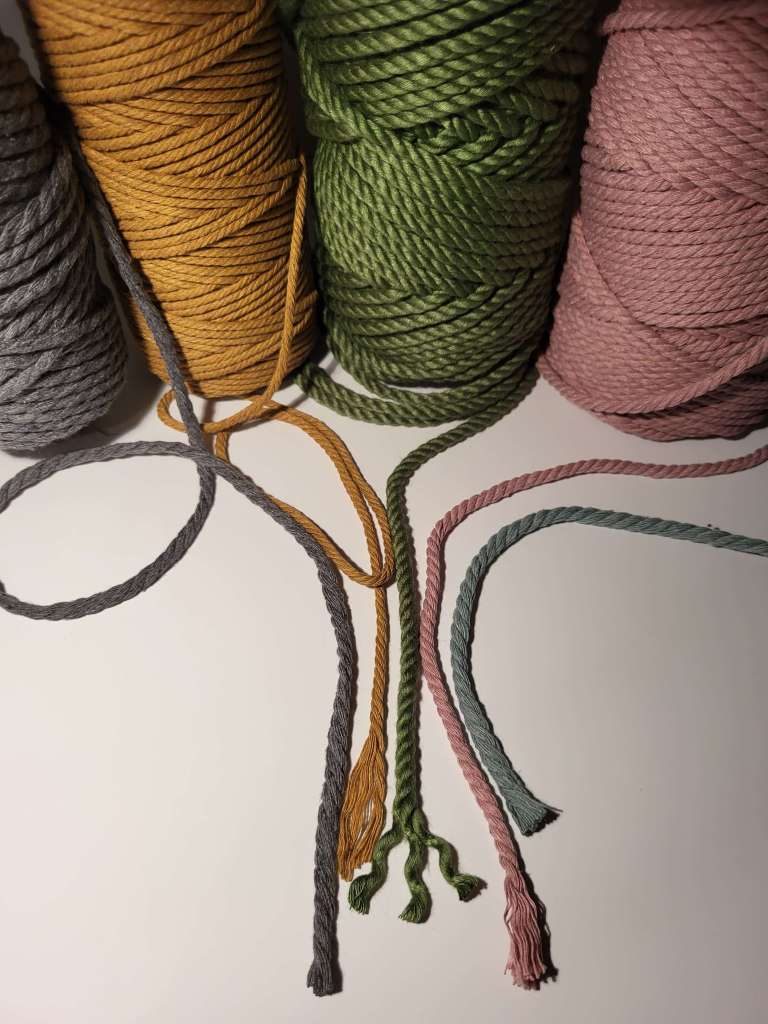

This dense and sturdy cord can be made up of a different number of strands, with 3 or 4-ply being the most popular. In my opinion, this is the perfect cord for beginners. It allows you to tie and untie knots easily without compromising the beauty of the project. It also produces beautiful fringes and tassels. However, as the diameter increases, the cord becomes more rigid and challenging to manipulate.
3. Single strand cord
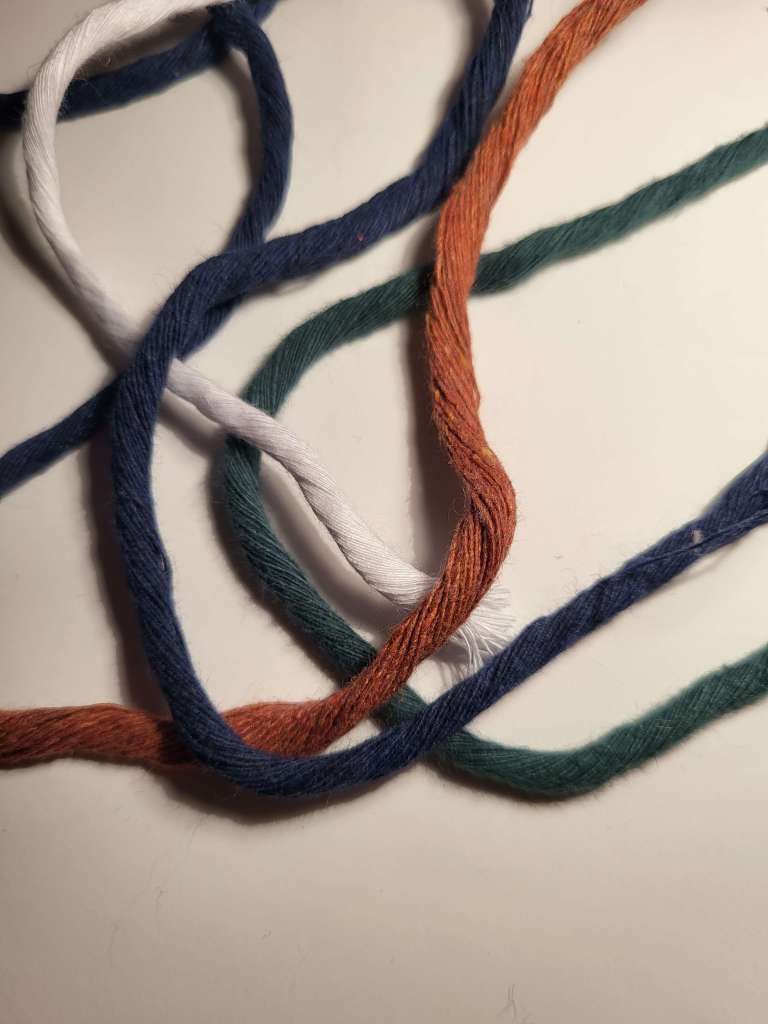
Soft and smooth to the touch, this cord adds a bohemian flair to any project. It produces beautiful fringes and tassels but tends to unravel easily, which requires a few tricks to maintain its beauty throughout the process. Personally, I find that this cord gives the best results once you’ve developed a bit of skill and experience.

What Diameter to Choose?

Depending on the type of project, macrame cords typically range in diameter from 1 mm to 10 mm. The greater the weight the project needs to support, the thicker the cord should be. For example, a tightly braided 5 mm cotton cord will support more weight than a 5 mm single-strand cord.
Available Materials
All these types of cords come in different materials:
- Cotton (standard, organic, recycled): The most commonly used material for indoor macrame creations.
- Jute: Perfect for a rustic look. Be careful, though—if handled for long periods, it can irritate the skin. I recommend wearing cotton gloves to protect your hands.
- Bamboo: This cord adds elegance to any project. It’s glossy, incredibly strong, and soft at the same time. The fringes and tassels are silky smooth. However, bamboo cords are more expensive and tend to unravel easily, requiring special care. I wouldn’t recommend them for beginners.
- Hemp, silk, or any other fiber: There’s no limit! Explore and experiment to discover what works best for your projects.
Specialty Cords
- Waxed cords in small diameters: Ideal for jewelry making and micro-macrame.
- Polyester cords in various sizes: Great for outdoor projects like hammocks, swings, or even pet leashes and collars.


How to Choose the Right Cord?
To make the best choice, consider:
- Your personal preference: Color, texture, and the desired final look.
- The type of project: Wall hangings, plant hangers, jewelry, etc.
- The purpose of your creation: Decorative or functional, for indoor or outdoor use.
In general, you can create the same project using different types of cords, but the final result will vary. Some are easier to work with, while others have a more luxurious look. Sometimes, I like to mix different types of cords within the same project—give it a try!
The quality of a cord depends on several factors: how it is made, its origin, and the dyeing process used. Whenever possible, opt for eco-friendly and responsibly made products. Family-run businesses often provide the best cords, combining quality with ethical practices.
Early on, I chose to use these types of products—not only for their reduced environmental impact but also to support artisans and committed manufacturers. Over time, I realized that these cords aren’t just more ethical; they also produce far better results—enhancing the beauty, durability, and overall quality of my creations.
Tips for Beginners
If you’re just starting out, I recommend beginning with a small project using a 3-ply cotton cord of 3- or 4-mm diameter.
- This type of cord is easy to find, available in a variety of colors, and pleasant to work with.
- The 3- or 4-mm diameter is ideal for developing the dexterity needed for knot-making, while also allowing you to clearly see the shape of each knot.
- Starting with a 1 mm or 1.5 mm cord may make it harder to identify your mistakes, while a 9 mm cord might be too rigid for inexperienced hands.
Now that you know more about the different types of cords and their characteristics, you’re ready to choose the perfect cord for your next project! 😊✨
If you enjoyed this article, know that I regularly share content to support you on your artistic journey in the world of fiber. I also write about life and how to approach it with joy and serenity. In addition, I offer tutorials and patterns.
If you’d like to be notified as soon as new content is published, subscribe to my newsletter! and « Need a spark of inspiration? Head over to the Inspirations & Bonus section on my site: www.the-fiber-tryst.com — or subscribe to my newsletter to download the Free Guide: 3 Simple Macramé Projects to Try Today. Just click here! »


 Odile Cacace The Fiber Tryst/Rendez-vous avec la Fibre
Laisser un commentaire